Debriefing:
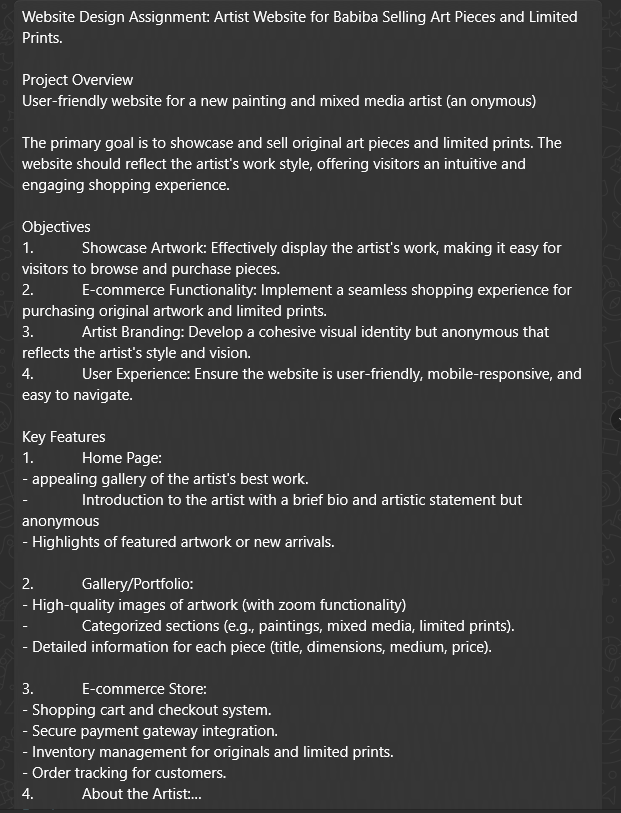
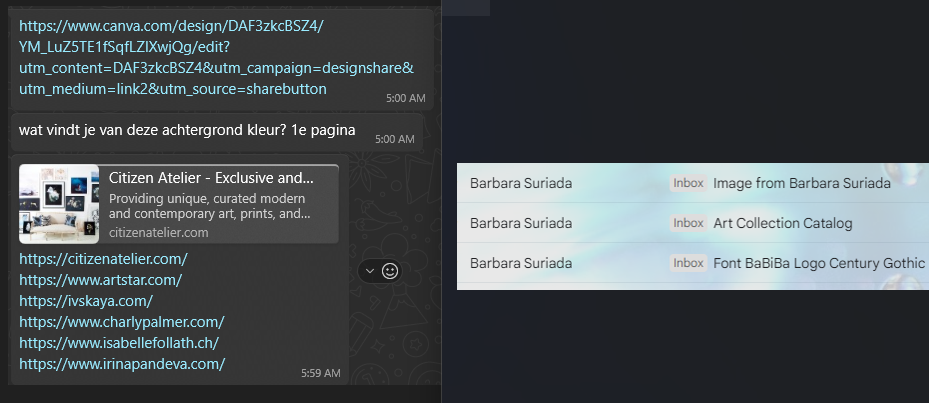
Before starting the project, I had a discussion with the stakeholders to get a clear understanding of what they want for the final product. I asked them to highlight the main goals and objectives they have for the website. Which they have done.
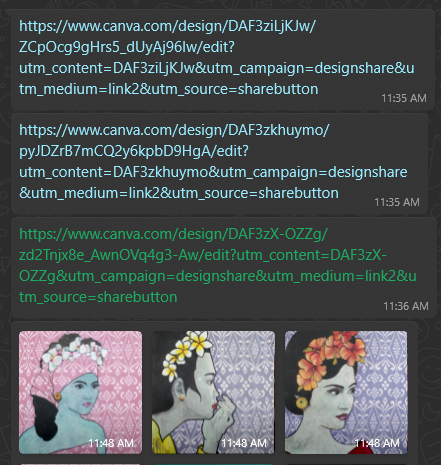
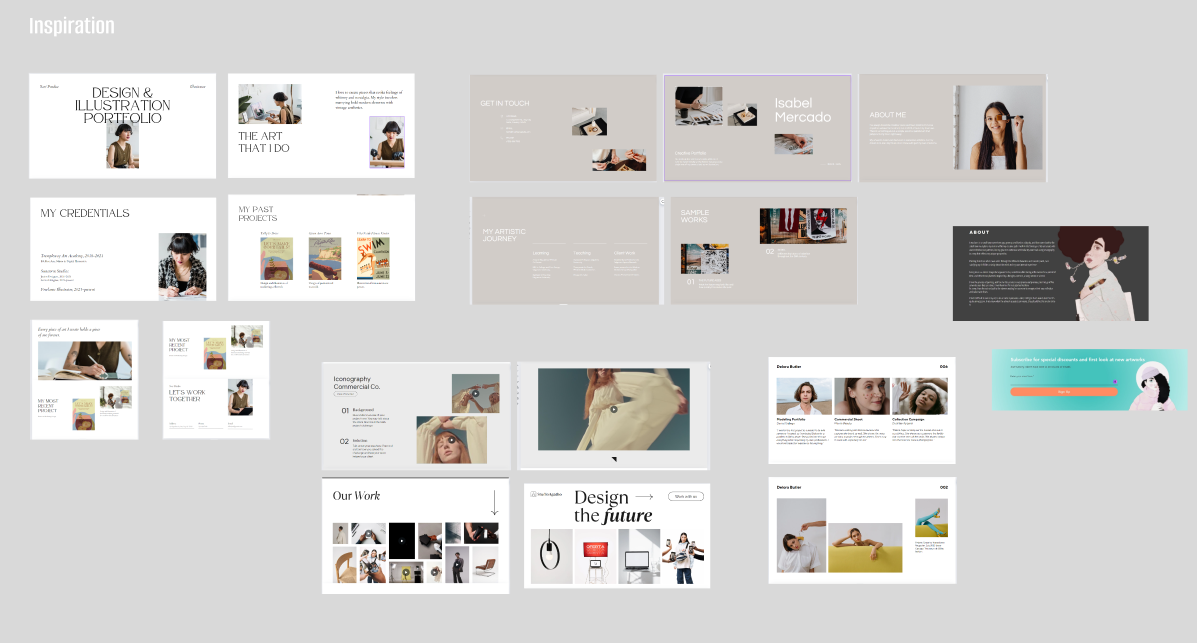
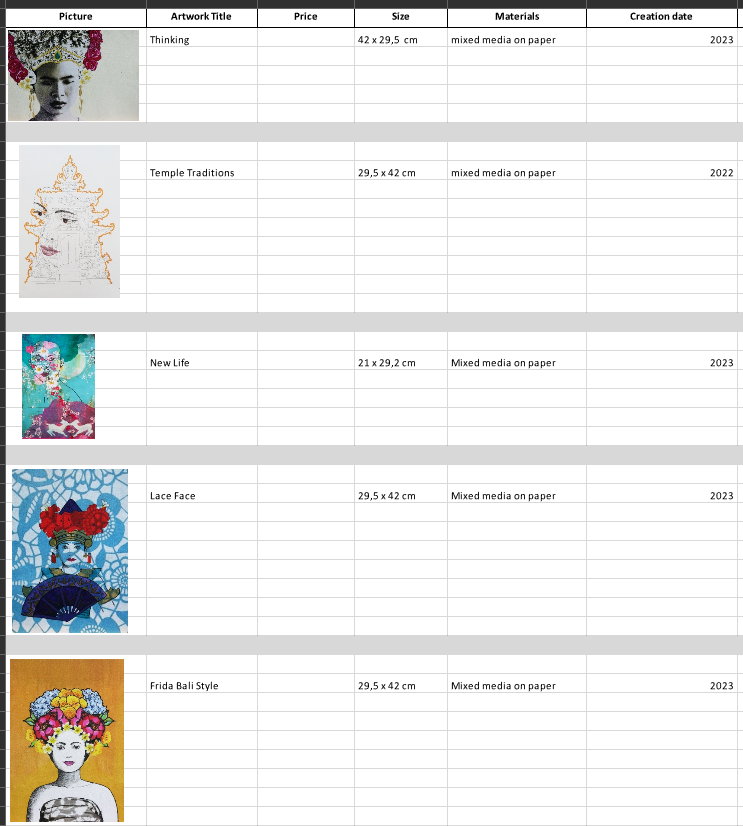
Brainstorming: I asked the stakeholders to share some inspirations to help me understand their vision better. They requested that I create a blend of these inspirations with a touch of my own creativity.
Secondary Research: Discovering multiple useful information after conducting secaondary research, for example finding the growth of online sales, consumers preferences, platform diversity, etc.
Primary Research: I interviewed several users and sent out surveys to gather detailed information about their experiences and preferences. This approach helped both the stakeholders and me gain valuable insights into what users are looking for in an online art shop. As well as considering some suggestions to create a better experience for the users.
Competitor Analysis: Identifying pottential competitors I
conducted a brief reseach comparing to some of the more known platforms such as Etsy and Artsy. More about the strength and weaknesses is available in the concept document.
Define
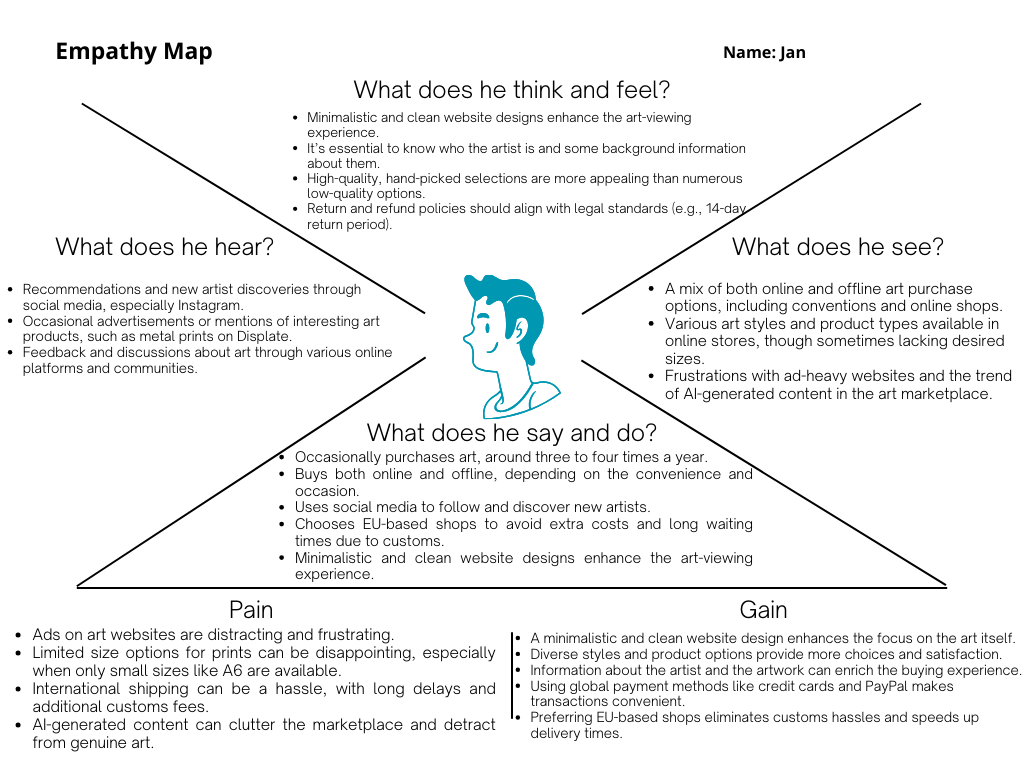
Empathy Maps: After the interviews, I created a few empathy maps to better understand users' thoughts, feelings, and behaviors. These maps helped me identify any key points or issues I might have missed earlier.
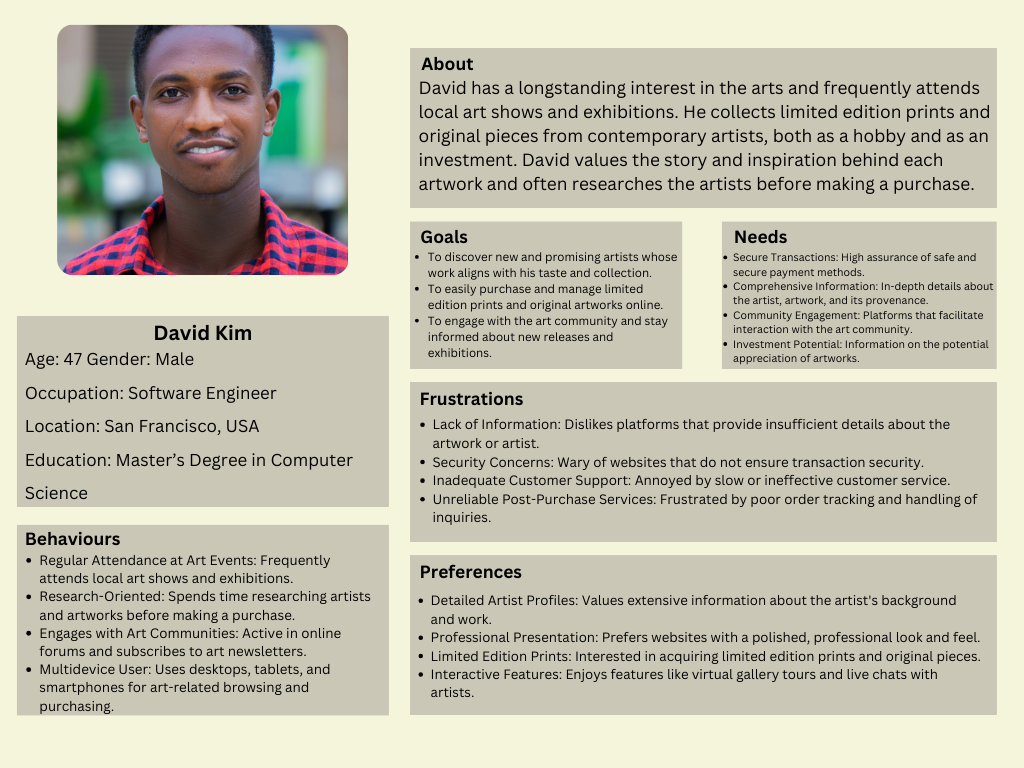
Personas: Creating personas based on these insights was necessary to ensure that the design and functionality of the online art shop would effectively meet the needs and expectations of the target audience.
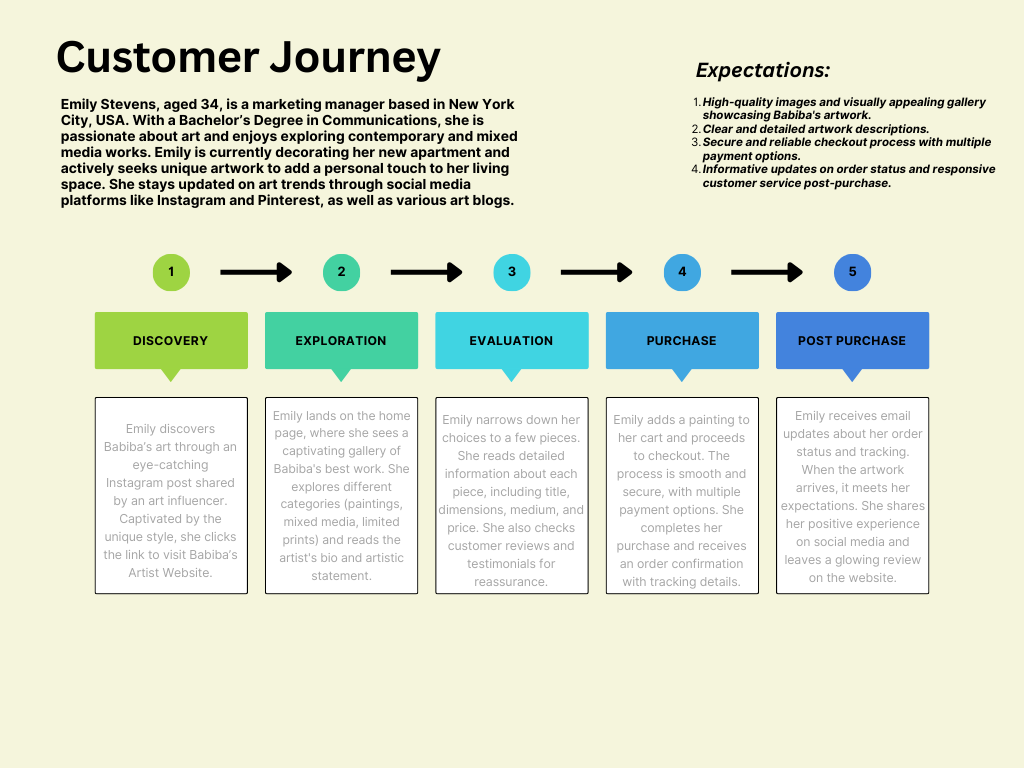
User Journey: Creating user journeys was crucial because it allowed us to see the entire experience from the user's perspective. This approach helped us pinpoint specific challenges users might face and opportunities to improve their interaction with the website.
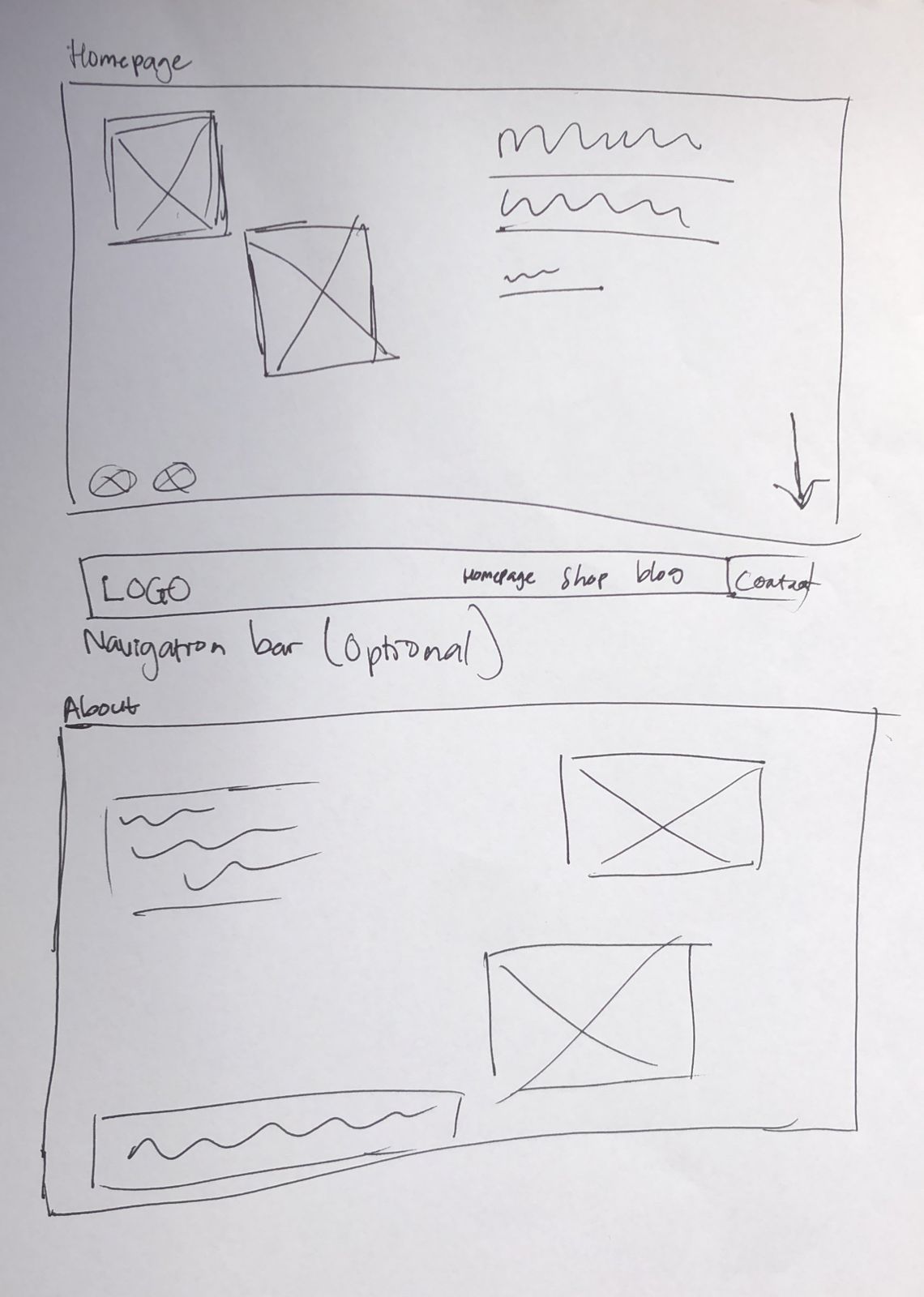
Concept Visualization: To begin the ideation process, I created sketches to visually present the concept to the stakeholder. After receiving approval, I moved forward with developing the digital wireframe.
Concept Document: Creating a concept document was important because it outlined the project's goals, scope, and direction clearly. The document also helped create a better understanding of what the website is all about, ensuring that stakeholders and others were aligned on the project's objectives and other crucial details.
Develop
Brainstorming: The second brainstorming included the stakeholder as well as the informationn recieved from the previous research phase to enhance the users experience exploring the website. Making some neccesary changes with approval from the stakeholder.
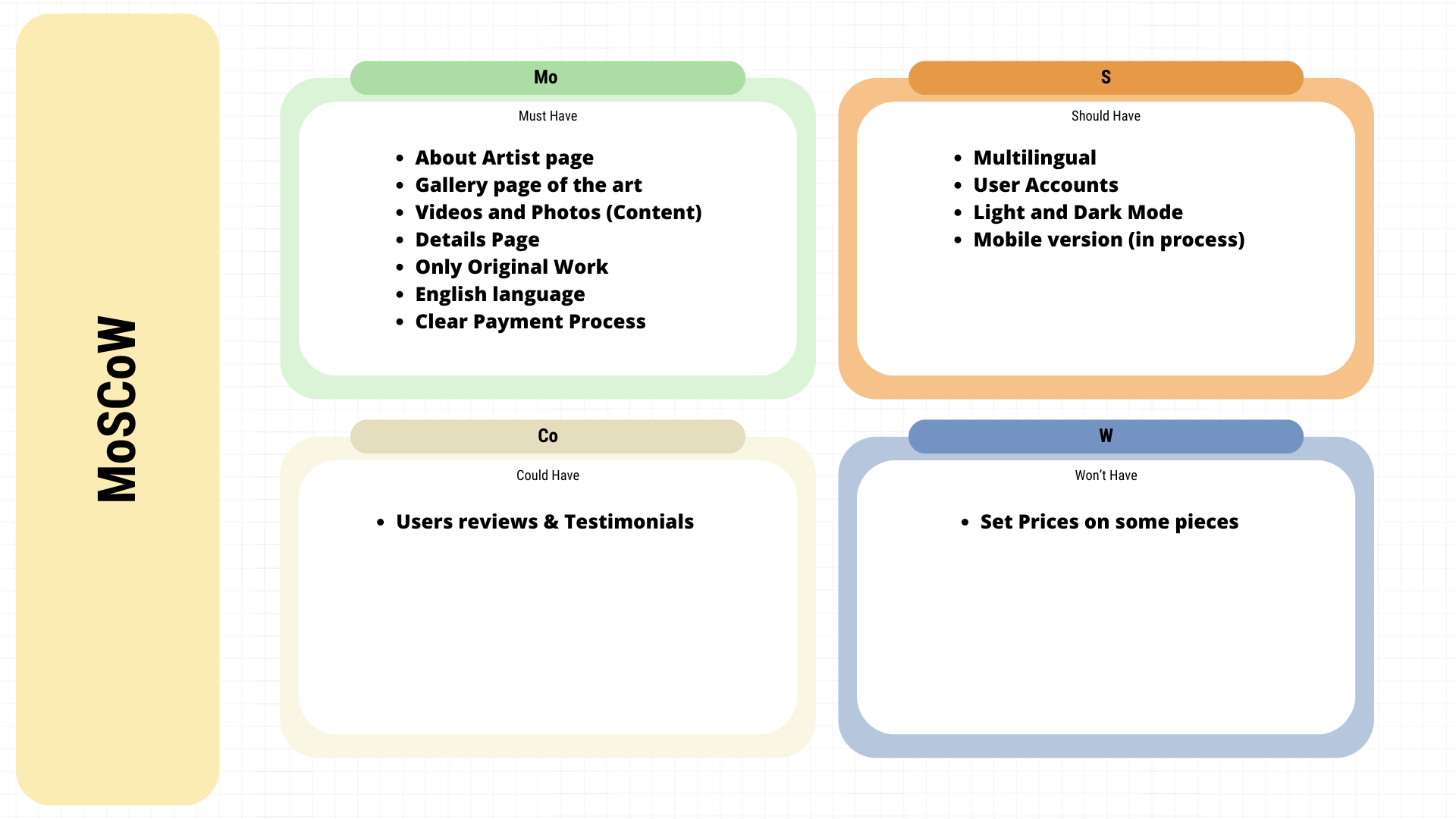
MoSCoW: This technique helped me in prioritizing things so that I can focus needed on implementing the main points on time.
By arranging the features on this visualization,I was able to
focus my attention on the most important aspects of the
project and develop the final result that meets the
needs of the client.
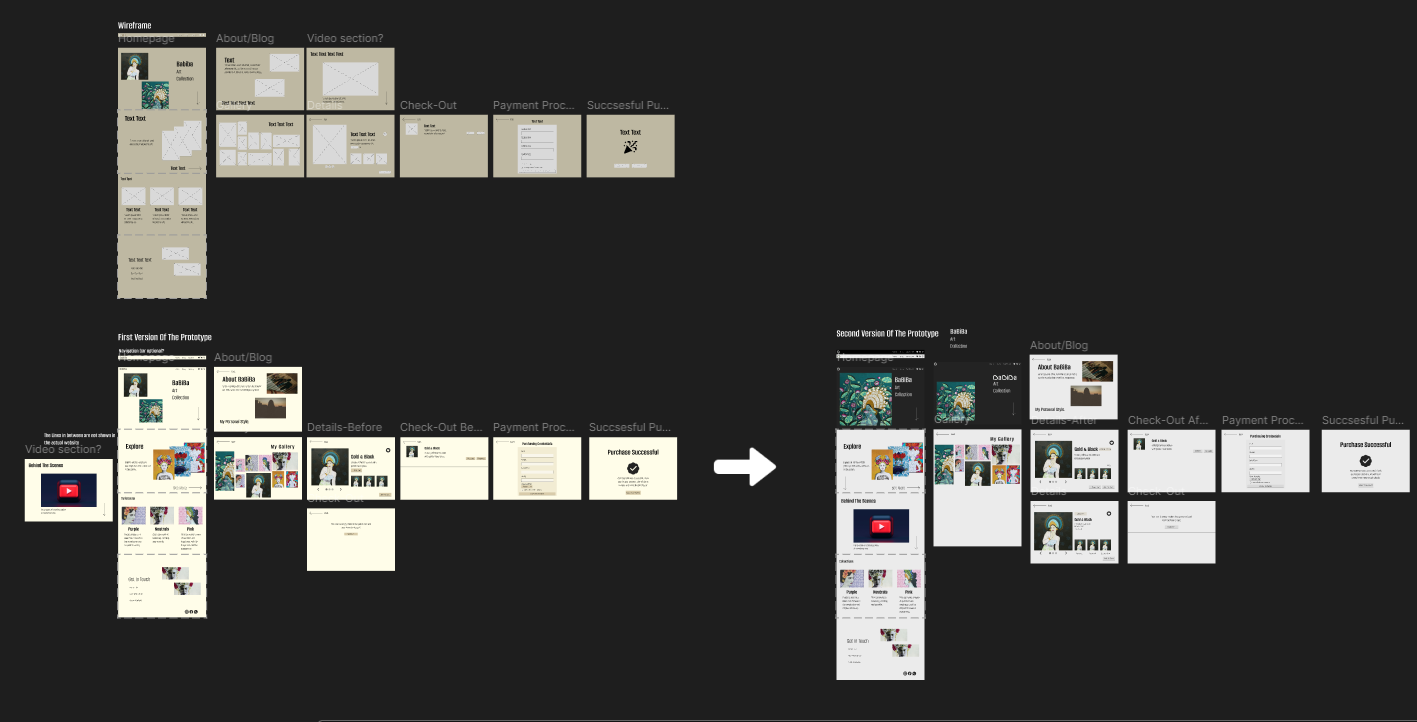
Wireframes/Prototypes: Visualizing how the website would
look the stakeholder and users, I created the prototype based on
the requirements and researched some of the useful feedback
from other users as well as the sketches that I created after consulting with the stakeholder. See the itterations of the prototype on figma.
Deliver
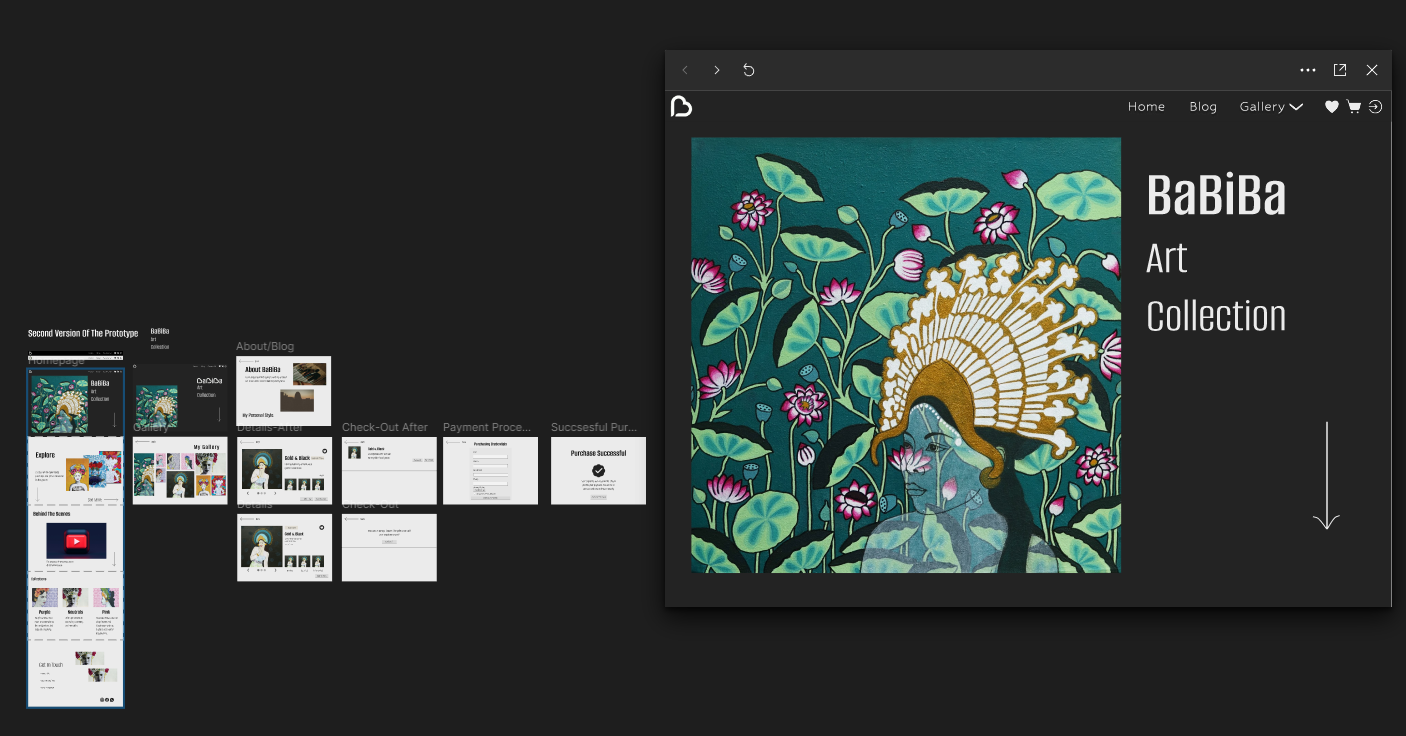
Usability Testing: To help improve the UI I conducted a few useability tests using the prototype that was created inf figma. While doing this online with the stake holder I noted and added other itteration based on what the stakeholder wanted to change and ended with the final product which can still be modified to fit the needs of the stakeholder.
UI Iterations: Iterations of the User Interface were made in
order to improve the overall user experience of the website.
Creating and discussing on where some of the placements of the items should go, receiving feedback on this I changed some of these positions in order to make it easier for the users.
WhatsApp & Git Repository: Making sure to stay in touch with the stakeholder and trying to make the process as smooth as possible in order to prevent any misscommunications we decided to use WhatsApp for this. GIT is used here in order to maintain a clear path for future developers.
Coded Testing: Making sure the websites code is
working properly and all the UI is working accordingly, I took part in
conducting in the final testing, where I played the part of the user seeing if there are any bugs that would need to be fixed and to prevent any other issues.
Advise to Stakeholders: I created an advisory document for stakeholders to keep the project on track. It explains the development so far and helps stakeholders and future developers understand the website's current state and how to move forward.
Final Product: Finishing up the final product I decided to host it using Netlify for the moment and I will be handing it over to the stakeholder and future developers with all the neccessary documentations that I prepared.
Semester Reflection
This semesters passion project has been a learning experience, enhancing my skills in research, design, project management, and ucd development. Although it was quite a strugle to finish this project in quite a short amount of time I finish everything I could and tried my best to keep up with the standards of each learning outcome. For more information about this you can read the document below.